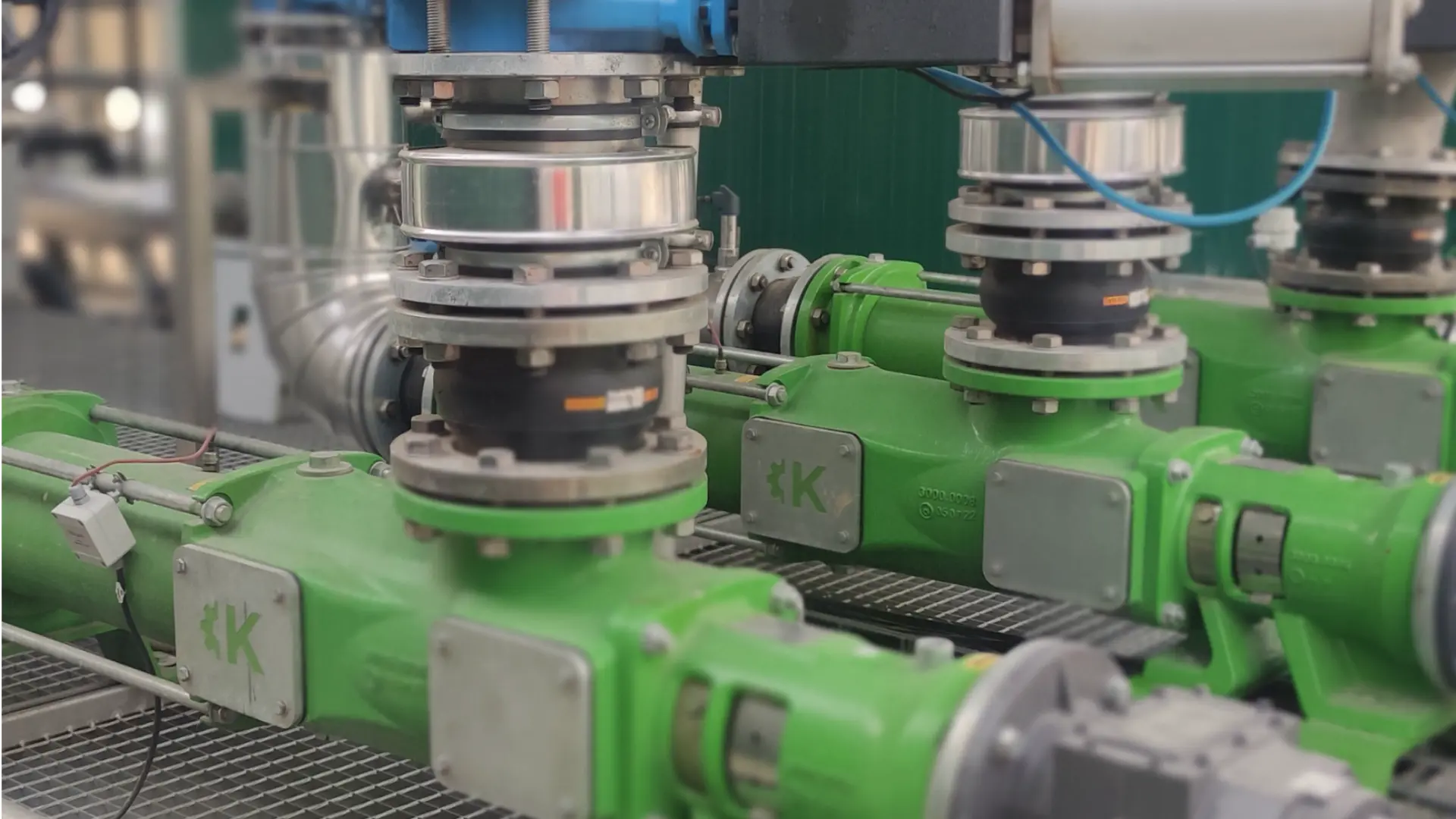
A progressive cavity pump is designed to handle fluids that are difficult to transfer using conventional pumping technologies, including sludge, highly viscous products, abrasive media and fluids containing solids. In industrial environments where operational reliability is as important as flow rate, its stable performance under demanding conditions makes it one of the most widely used positive displacement pumping technologies.
Cuando el proceso exige control, suavidad de bombeo y fiabilidad mecánica, la selección del equipo no puede hacerse solo por el caudal nominal. La información referente al fluido, la presión, la temperatura, el contenido en sólidos, el mantenimiento previsto, entre otros, es básica.
What is a progressive cavity pump and how does it work?
A progressive cavity pump, also known as a helical rotor pump, eccentric screw pump or single screw pump, transfers fluid through sealed cavities that move continuously from the suction side to the discharge side. This operating principle delivers a smooth, non-pulsating flow while handling the product with minimal shear.
The progressive cavity principle: rotor and stator
Rotor: The rotor is a precision-machined helical metal component, typically manufactured from stainless steel. Its eccentric rotation inside the stator creates continuously progressing cavities that move the fluid smoothly through the pump.
Stator: The stator is an elastomeric component that houses the rotor and forms the pumping cavities. Selecting the appropriate elastomer is essential, as it determines the pump’s chemical resistance, temperature capability and mechanical durability.
This operating principle minimizes shear forces and helps preserve the physical properties of shear-sensitive products.
Main advantages of industrial progressive cavity pumps
Progressive cavity pumps offer several important advantages:
- Continuous, pulse-free flow for stable transfer and dosing applications.
- Excellent self-priming capability, achieving vacuum levels of up to -0.8 bar, depending on the configuration.
- Outstanding performance with viscous, abrasive and solids-laden fluids.
- Low shear pumping, ideal for sensitive products and delicate mixtures.
- Capability to operate at high discharge pressures in multi-stage configurations, with some models reaching 36 bar.
Types of progressive cavity pumps by design and application
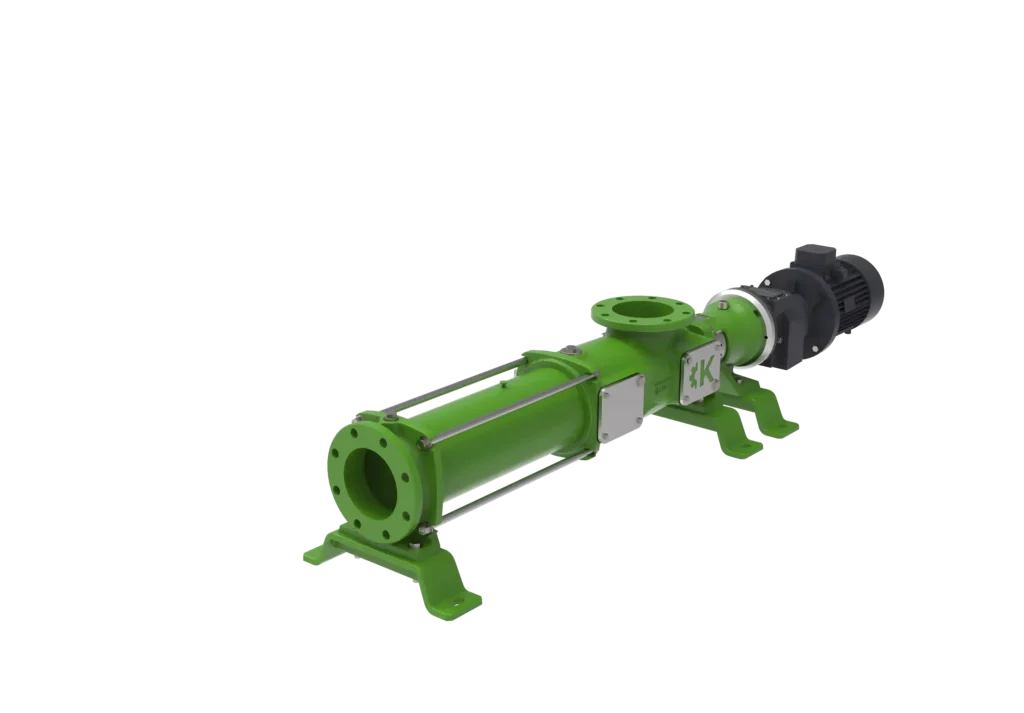
Kronoa® Premium Line Suction (Direct suction)
- Direct connection: Designed with a direct suction inlet connected to the process pipeline.
- High suction capacity: Provides exceptional self-priming capability of up to -0.8 bar.
- Operational flexibility: Pumping direction can easily be reversed whenever required by the process.
- Maximum robustness: Designed for severe-duty applications involving abrasive or heavily loaded fluids at operating pressures of up to 36 bar.
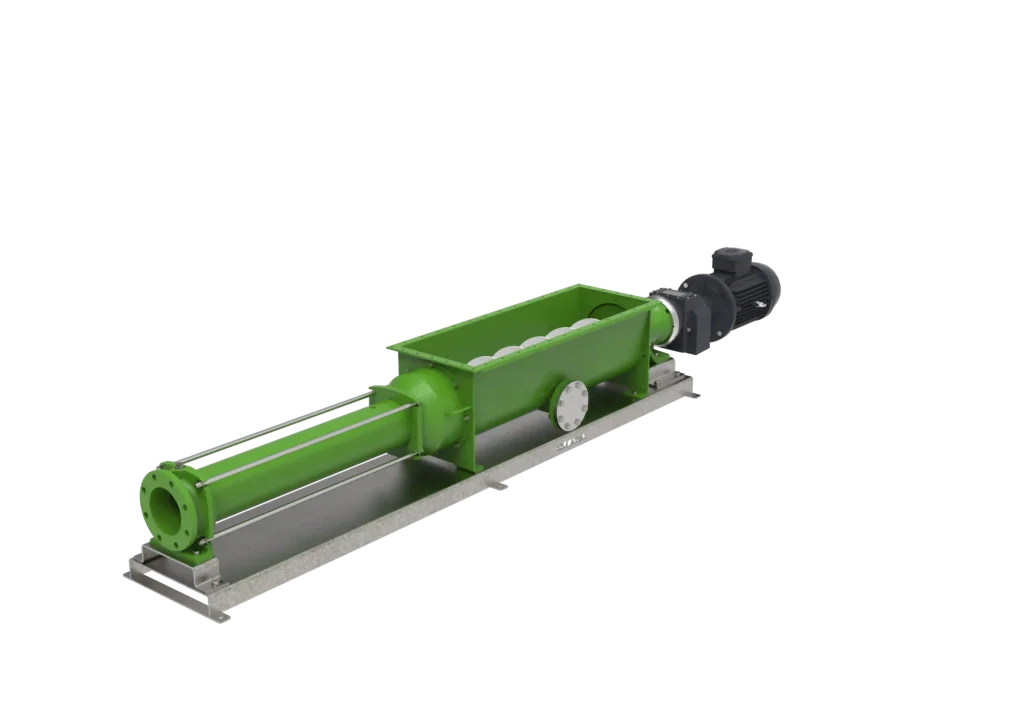
Kronoa® Premium Line Hopper (Hopper-fed)
- Forced-feed design: Equipped with a wide hopper and a large-diameter feed screw with reinforced flights.
- Reliable product feeding: The ideal solution for transferring highly viscous, dry or dense products that naturally tend to bridge or clog conventional pumping systems.
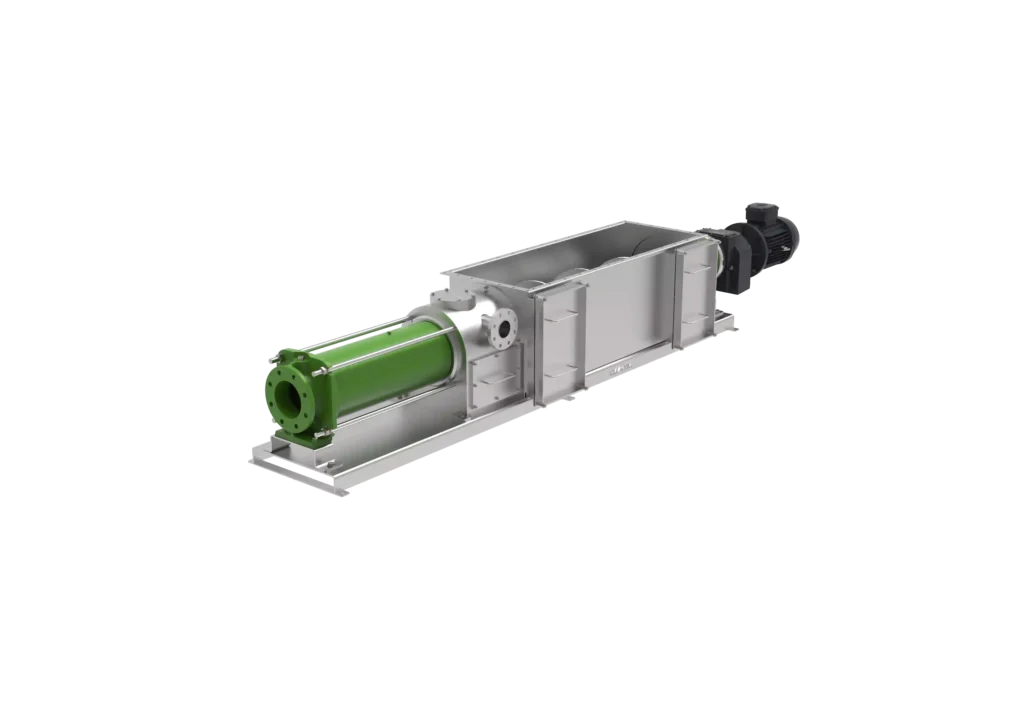
Kronoa® Premium Line Biomix (Substrate mixer)
- Designed for co-digestion: Specifically developed for biogas plants and organic waste recovery facilities.
- Integrated mixing: Combines solid substrates such as manure, silage and vegetable waste with liquid phases or recirculated sludge to ensure homogeneous feeding of anaerobic digesters.
- Integrated protection: Features a built-in stone trap within the hopper to prevent oversized solids and foreign objects from reaching the rotor-stator assembly.
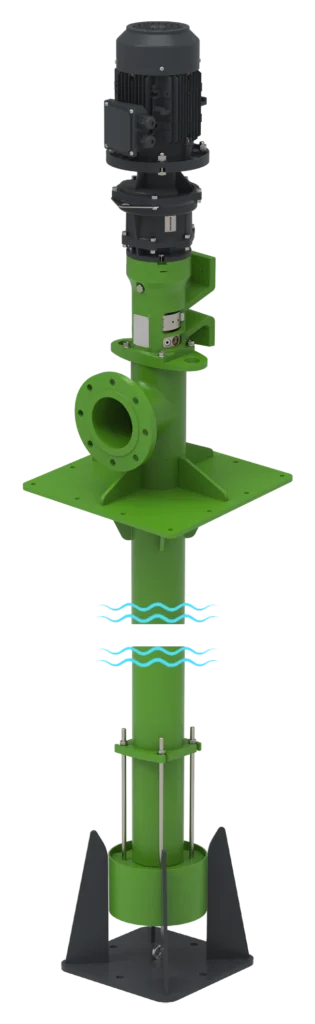
Kronoa® Premium Line Vertical (Vertical execution)
- Deep suction capability: Vertical shaft pumps designed to extract highly viscous fluids directly from pits, tanks and collection sumps.
- Custom-built configuration: Shaft length and mounting plates are manufactured according to the dimensions of each installation.
- Enhanced protection: Available with fluid homogenization systems and protection against foreign objects entering the pump.
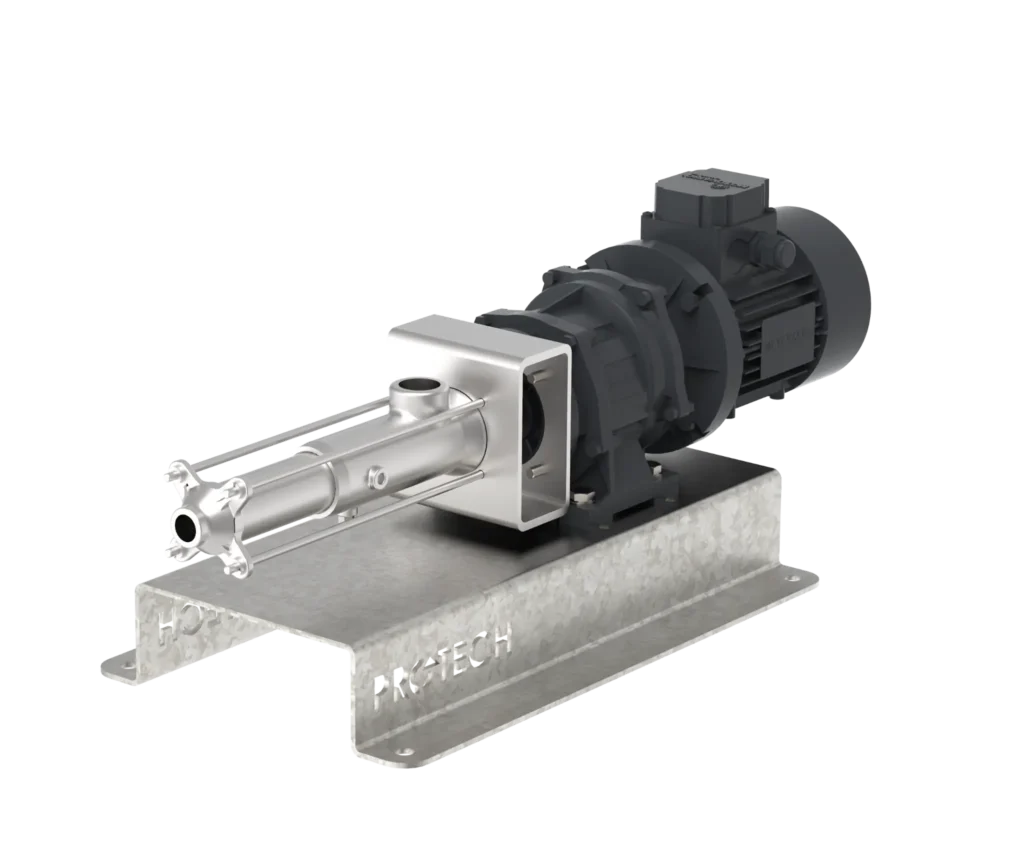
Protech Block Line (Compact close-coupled design)
- Compact monoblock construction: L-shaped design optimized to maximize pumping capacity while minimizing power consumption.
- Designed for moderate pressures: Suitable for low-pressure transfer applications.
- Chemical versatility: Recommended for clean or moderately abrasive fluids, including polymer dosing, biological sludge, whey, glycerine and separated digestate.
Industrial applications of progressive cavity pumps
Thanks to their mechanical reliability under demanding operating conditions, progressive cavity pumps have become essential across numerous industries.
Wastewater treatment and sludge handling
In municipal and industrial wastewater treatment plants (WWTPs), progressive cavity pumps are widely used to transfer concentrated sludge, digestate and feed dewatering equipment. Their stable performance helps maintain process reliability where continuous operation is essential.
Biogas plants and agricultural energy
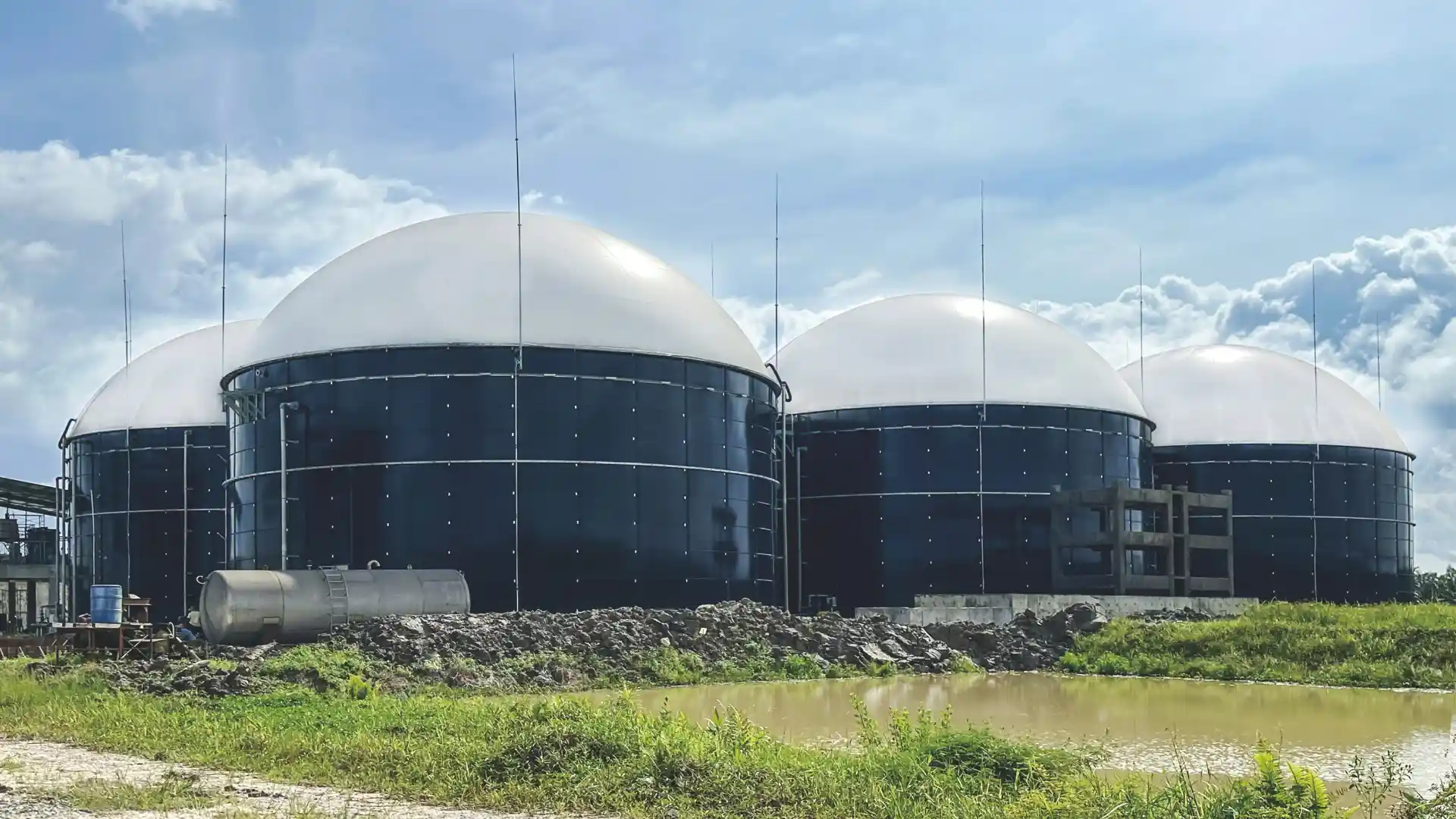
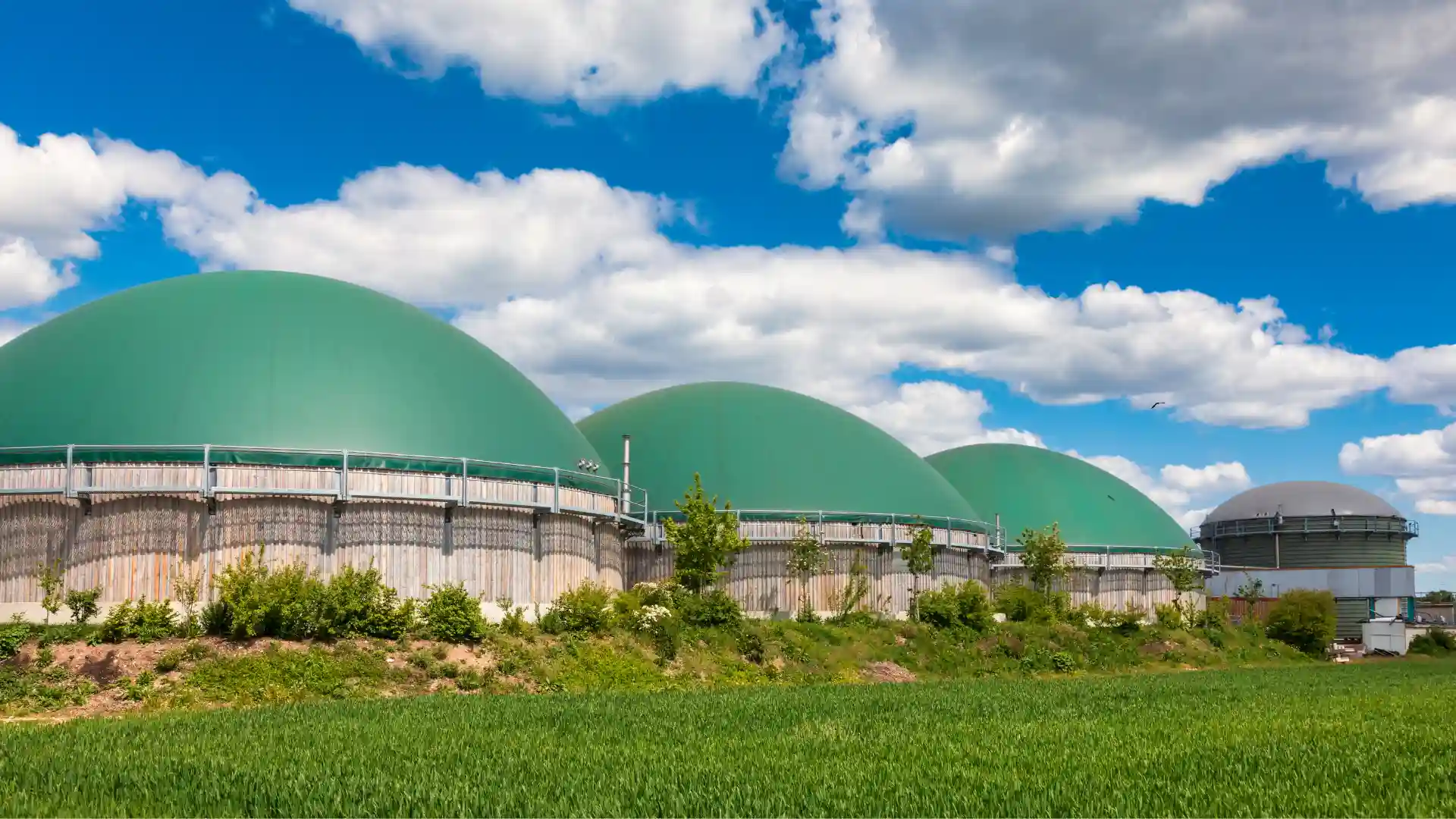
Within biogas facilities, progressive cavity pumps handle manure, agricultural substrates and heavy organic waste. Their ability to process complex materials while ensuring homogeneous feeding makes them ideal for anaerobic digestion systems.
Food and beverage industry
Food processing applications often require gentle product handling. Progressive cavity pumps are commonly used for transferring wine, concentrated fruit juices and other viscous products where preserving product integrity is essential.
Chemical, paper and cosmetics industries
These pumps are also widely used for dosing polymers, resins, chemicals and other viscous or abrasive products. Their value lies in delivering accurate flow control and repeatable process performance.
How to choose the right progressive cavity pump
Fluid viscosity and temperature
Higher viscosity generally requires lower rotational speeds to ensure complete cavity filling. Temperature also affects stator expansion and therefore influences operating clearances.
Operating pressure and required flow rate
The required discharge pressure determines the number of hydraulic stages needed. Correct sizing avoids unnecessary power consumption while minimizing premature wear.
Material compatibility (elastomers and alloys)
Rotor materials, stator elastomers and metallic components must be selected according to the chemical corrosion and abrasive properties of the pumped fluid. Elastomers such as NBR, EPDM and FKM should always be chosen based on actual operating conditions.
Maintenance and multi-brand spare parts availability
In industrial facilities, maintenance is just as important as initial equipment selection. Low-wear components and readily available compatible spare parts help minimize downtime and improve plant availability.
A reliable technical partner adds value not only by supplying the equipment but also by providing maintenance support, inspections and responsive after-sales service.
For this reason, Protech Continental Group offers a dedicated after-sales service department together with a comprehensive stock of multi-brand spare parts compatible with the leading progressive cavity pump manufacturers, ensuring fast and cost-effective support whenever required.
Progressive cavity pump vs. centrifugal pump vs. lobe pump
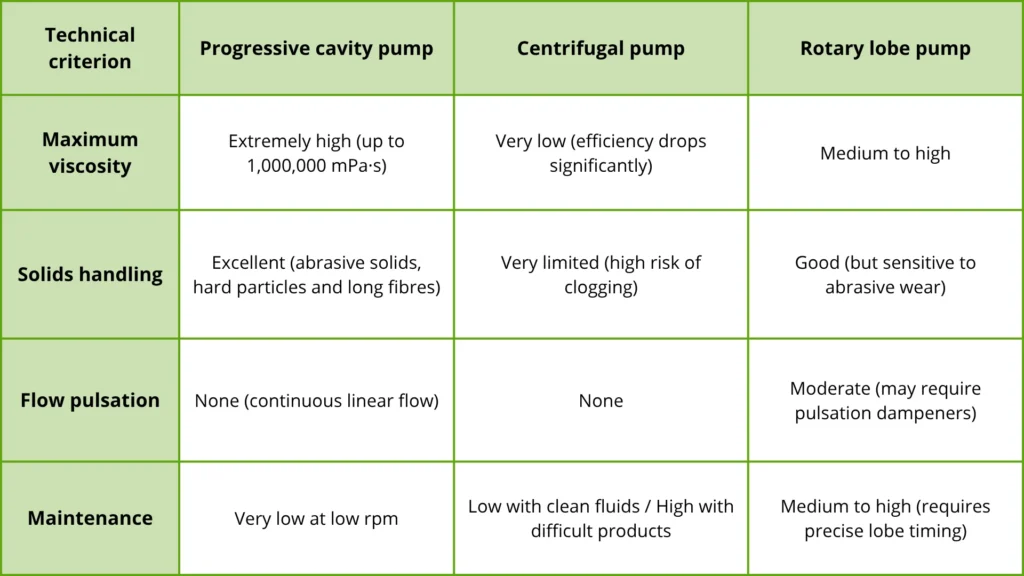
In practice, this comparison helps answer a common question: centrifugal pumps rapidly lose efficiency when handling difficult fluids, while progressive cavity pumps offer greater stability and a wider operating window when viscosity or solids content increases.
Frequently asked questions about progressive cavity pumps
Can a progressive cavity pump run dry?
No. Dry running will damage the elastomer stator within seconds due to friction against the rotor. Dry-run protection systems, such as stator temperature sensors or flow monitoring devices, are essential.
What determines the service life of the rotor-stator assembly?
Rotor and stator life depends on rotational speed (rpm), fluid abrasiveness, operating pressure and elastomer type (NBR, EPDM or FKM), among other factors. Reducing pump speed through a properly sized geared motor significantly extends component life.
What is the difference between the Kronoa® Premium Line and the Block Line?
The Premium Line is designed for heavy-duty, high-pressure applications (up to 36 bar) and features an independent bearing housing with cardan shaft transmission. The Block Line uses a compact close-coupled design optimized for lower pressures and less abrasive fluids.
Why is after-sales support important at Protech Continental?
After-sales service is one of the strategic pillars of Protech Continental Group, ensuring operational continuity, extending equipment service life and minimizing downtime.
Our dedicated after-sales department provides specialized technical support, maintenance services and high-quality multi-brand spare parts for the leading positive displacement pumps on the market. We maintain extensive stock of wear components (including rotors, stators, mechanical seals, drive shafts, gaskets and other replacement parts) compatible with brands such as Kronoa, Seepex, Netzsch, Allweiler and Mono, enabling us to provide a fast and effective response whenever our customers need assistance.