In a biogas plant, choosing the right pumping technology is essential to maintain a continuous flow, prevent blockages and reduce costly downtime. Not all pumps handle sludge, silage, manure or solids-laden digestate in the same way, and this directly affects the reliability of the installation. The right pump does more than simply move the product: it protects the process, stabilises operation and helps the anaerobic digestion process perform as required.
Why is the pumping system critical in a biogas plant?
The pumping system is one of the components that most affects the stability of a biogas plant. If feeding into the digester fails, recirculation is inconsistent or digestate is not discharged correctly, the entire process is affected. Therefore, the pump should not be considered an auxiliary component, but a key element in the overall performance of the plant.
Challenges when handling viscous and abrasive substrates containing solids
Anaerobic digestion plants commonly handle silage, sludge, manure and digestate with a high solids content or containing fibrous and abrasive materials. Foreign materials such as stones, sand, plastics and other hard objects may also be present, making pumping even more challenging.
These conditions require pumps for biogas digesters that can handle highly variable products without losing performance or causing recurring blockages. When the substrate is dense, irregular or contains a high concentration of solids, the pump must be able to push the material rather than simply convey it.
How pump selection affects reactor performance
Equipment selection influences the quality of the flow entering the reactor and the stability of the anaerobic digestion process. A properly sized biogas pumping system ensures a consistent feed, reduces mechanical stress on the product and helps prevent premature degassing or sudden flow rate variations.
When product transfer is intermittent or the equipment is not suitable for the material being handled, wear, energy consumption and operational incidents increase. In a biogas plant, this means higher maintenance requirements and reduced reliability.
What types of pumps are used in a biogas plant?
There is no single solution suitable for every anaerobic digestion plant. The choice depends on the type of substrate, the stage of the process and the hydraulic requirements. Protech Continental Group’s product range covers different requirements for pumping substrates and digestate.
Progressive cavity pumps: the solution for heavy substrates
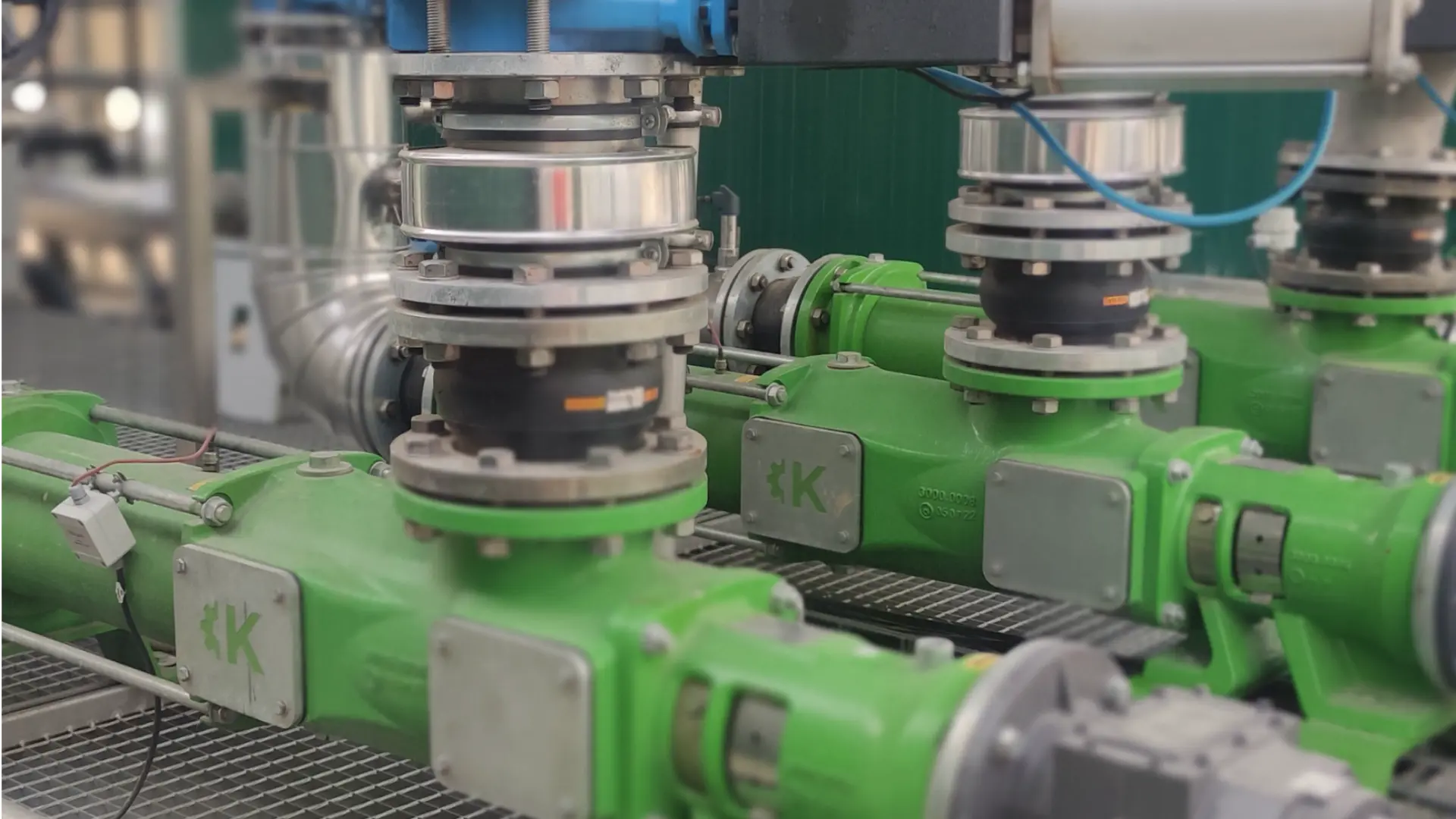
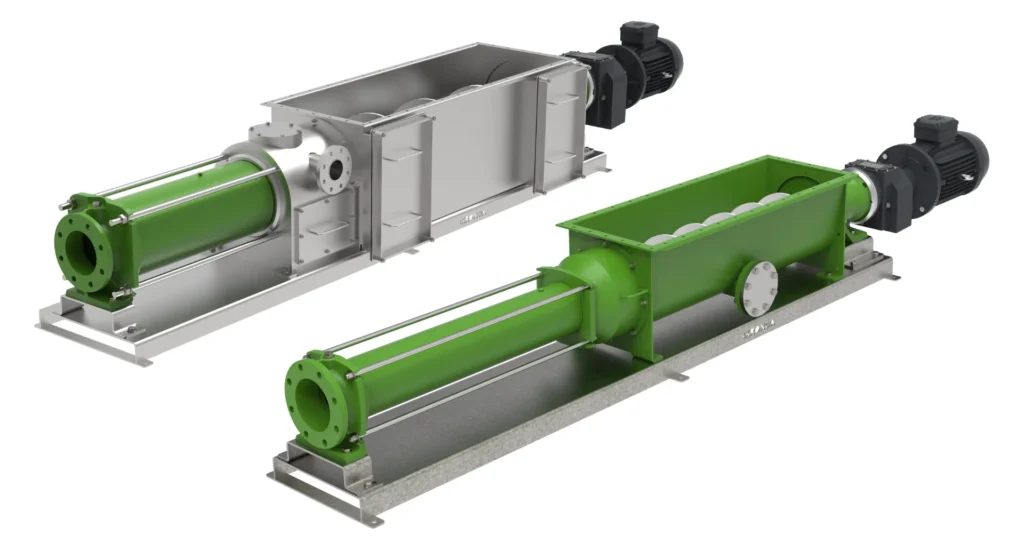
Progressive cavity pumps are one of the most reliable solutions for handling dense and challenging substrates. Within Kronoa’s Premium range, the Hopper models and the Biomix, equipped with a stone trap, are designed to dose heavy organic matter, mix co-substrates and handle products that do not flow easily on their own.
In a biogas plant, this type of pump is particularly suitable for feeding the digester and for applications where the material contains a high concentration of solids or has a paste-like consistency. The hopper facilitates product entry, while the stone trap provides additional protection against foreign materials that could damage the equipment.
Industrial rotary lobe pumps: continuous operation and high reversibility
Industrial rotary lobe pumps are an excellent choice when continuous operation, reversibility and a compact design are required. In anaerobic digestion plants, they are used for filling, emptying and recirculation processes, particularly when a robust solution with straightforward maintenance is needed.
Their reversible operation makes it easier to adapt the system to different processes within the plant. Their design also facilitates component interchangeability and access to wear parts, which is especially valuable in applications where operational continuity is a priority.
Submersible and surface centrifugal pumps: handling high liquid flow rates
When the product is more fluid, submersible and surface centrifugal pumps are the most suitable solution for handling high flow rates. In a biogas plant, they are used to transfer liquid manure, process water, leachate or separated liquid digestate.
In these applications, the priority is not to push heavy material, but to ensure volume, continuity and hydraulic efficiency. These pumps are therefore highly suitable for stages of the process where the fluid has already been treated or separated.
Macerators and grinders: essential protection before pumping
Before the main pump, macerators and grinders perform an essential role in a biogas plant. They reduce the size of fibres and help retain or break down foreign materials such as plastics and stones, preventing them from reaching the pumping system.
In practice, this protects rotors, stators and mechanical seals while significantly reducing blockages. In substrate and digestate pumping systems, this preliminary protection can make the difference between stable operation and frequent downtime.
At the same time, this equipment performs another important function in the digestion process: improving the biodegradability of the product and therefore maximising biogas production.
Key criteria for selecting the right pump for your plant
Choosing the right pump involves more than simply considering the required flow rate. The characteristics of the product, pressure, solids content and actual operating conditions must also be assessed.
Solids content (% DM) and product viscosity
The higher the dry matter content and viscosity of the mixture, the more suitable technologies such as progressive cavity pumps become. This is a key factor in a biogas plant, as the behaviour of digestate, sludge, manure and co-substrate mixtures can vary considerably.
Operating pressure, required flow rate and presence of gases (H₂S)
Operating pressure, the required flow rate and the potential presence of gases such as H₂S must also be considered. In a biogas plant, these factors affect material selection, the type of sealing system and preventive maintenance requirements. The selected pump must be suitable for the plant’s actual operating conditions, rather than for theoretical conditions alone.
Specialised biogas equipment from protech continental group
If you are designing, reviewing or upgrading a biogas plant, the pumping system should be selected according to the substrate, the stage of the process and the actual operating requirements of the installation. This is precisely the approach taken by Protech Continental Group, with solutions including Kronoa progressive cavity pumps, rotary lobe pumps, centrifugal pumps and macerators for anaerobic digestion and the handling of complex products.
If you need expert advice on selecting pumps for biogas digesters or defining the best pumping strategy for substrates and digestate, contact us. We will help you identify the most suitable configuration for your plant and the specific challenge you need to solve.
Frequently asked questions about pumps in biogas plants
What is the best pump for feeding a digester with solid substrates?
The most suitable option is usually a progressive cavity pump with a hopper, such as Kronoa’s Biomix or Hopper model. Its design allows it to push paste-like materials and handle dense substrates while providing protection against stones and other foreign materials.
How do stones and metals affect pumps in a biogas plant?
Stones and metals can cause serious failures in rotors and stators, as well as significant damage to internal components. It is therefore essential to install stone traps or upstream macerators to protect the pumping system.
Which pump is recommended for handling separated digestate?
It depends on the fraction being handled. High-flow centrifugal pumps are generally more suitable for liquid digestate. If the product remains viscous or contains a significant solids load, low-pressure progressive cavity or rotary lobe pumps, such as the Block Line, may be more appropriate, depending on the specific application within the biogas plant.
Why are low-speed pumps preferred in anaerobic digestion?
They significantly reduce abrasive wear and energy consumption. In a biogas plant, low-speed operation also helps extend the service life of spare parts and maintain a more stable system over time.
What preventive maintenance do progressive cavity pumps require in this industry?
Preventive maintenance should focus on inspecting the rotor-stator assembly, checking the mechanical seal and ensuring the availability of quick-replacement spare parts. In an anaerobic digestion plant, anticipating wear is essential to prevent unexpected downtime.