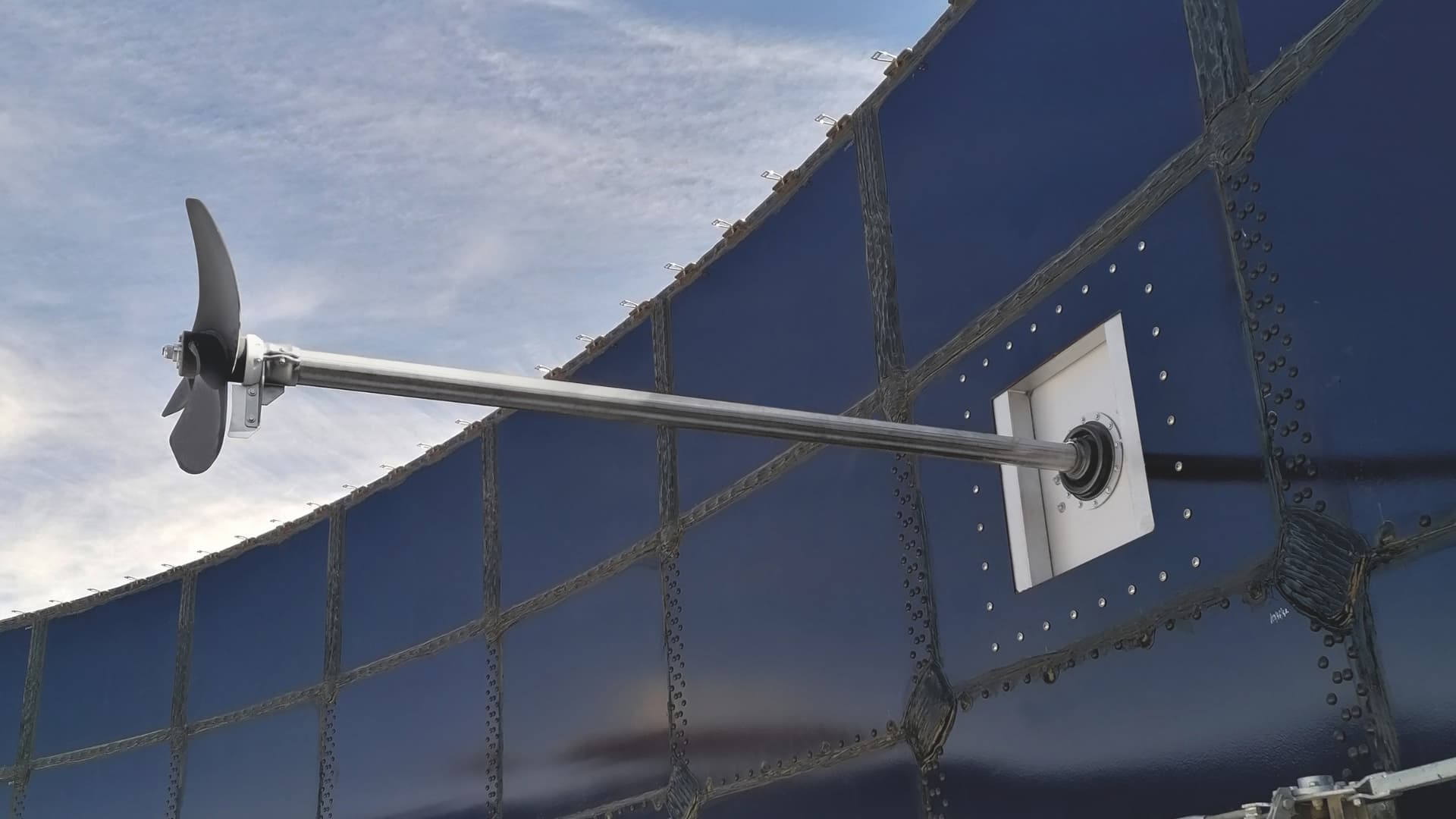
Sizing a stirrer for a biogas digester involves more than considering volume alone. Diameter determines horizontal coverage, height defines vertical reach, and substrate type determines the risk of sedimentation, crust formation or loss of homogeneity.
The practical consequence is clear: poor agitation can compromise process stability, increase stirrer energy consumption and raise total operating costs.
Why volume alone is not enough to size a stirrer
Two digesters with the same volume can behave very differently. Sizing a stirrer for a biogas digester requires assessing how the contents move inside the reactor, rather than simply considering its capacity in m³.
- A wide reactor and a tall reactor do not distribute the mixture in the same way, even when they have the same working volume.
- Sizing based on volume alone can leave dead zones, require more power than necessary or result in insufficient agitation.
- In anaerobic digestion, mixing is more than an operational detail: it affects process stability and plant continuity.
Digester sizing depends not only on volume, but also on how the flow actually behaves inside the reactor.
How digester diameter affects stirrer sizing
A stirrer must be sized to suit the digester’s cross-sectional area. The larger the diameter, the more demanding the horizontal coverage requirements of the agitation system.
How digester diameter affects stirrer sizing
In large-diameter digesters, the priority is to ensure that mixing reaches the entire working cross-section, rather than remaining concentrated near the stirrer’s discharge point. With this type of geometry, biogas stirrers must provide effective radial flow distribution, adequate coverage between units and proper circulation in peripheral areas.
- The key is not simply to move material in one area, but to maintain effective circulation across the entire cross-section.
- If circulation around the perimeter is insufficient, sedimentation increases and homogeneity decreases.
The larger the diameter, the more important it is to achieve effective, uniform horizontal agitation coverage.
More compact digesters
In narrower digesters, mixing may appear simpler, but it is still essential to check that movement is properly distributed throughout the reactor. Strong local flow is not enough if the overall mixture is not homogeneous.
How digester height affects stirrer sizing
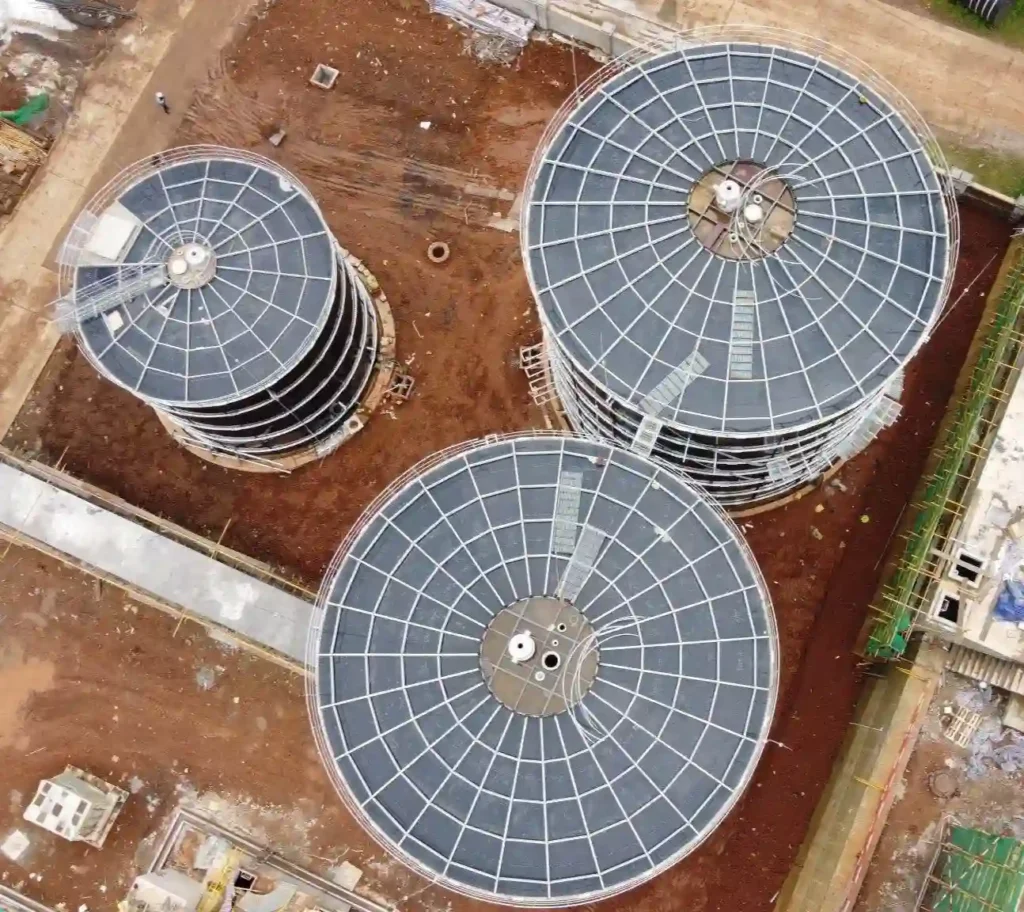
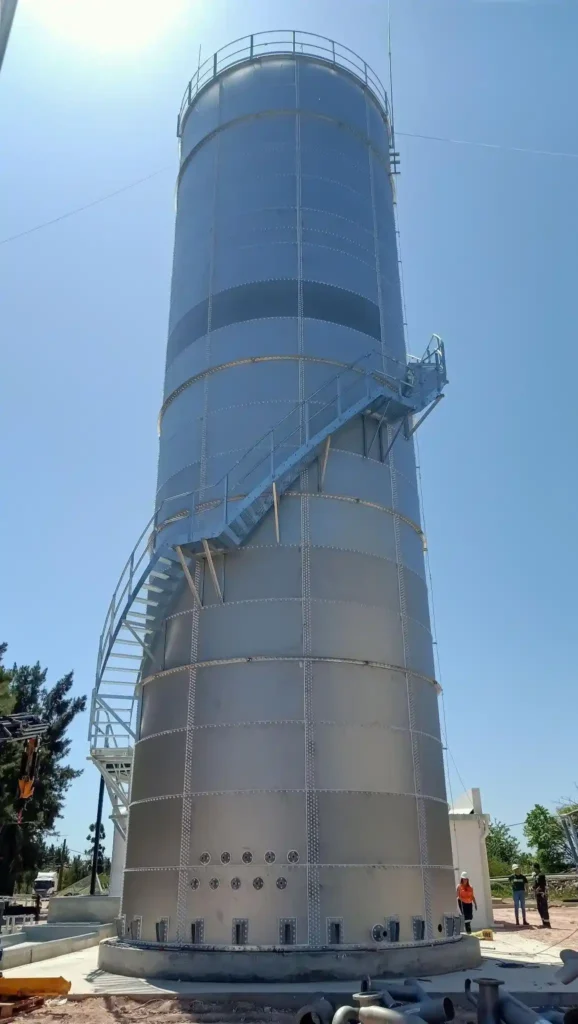
Height changes the vertical behaviour of the digester contents. Sizing a stirrer for a biogas digester requires checking whether a single agitation zone covers the full liquid column or whether different installation levels or positions are needed.
Tall digesters
Layers or stratification can develop in tall digesters, particularly when the substrate tends to float or settle. In these cases, a single agitation solution may not be sufficient to maintain a stable mixture throughout the full working height.
- The technical assessment must include the stirrer’s effective vertical reach.
- It is also advisable to assess whether the flow pattern reaches the middle and upper sections without leaving areas with limited circulation.
The taller the digester, the more important it is for agitation to cover the full liquid column, rather than a single area.
How substrate type affects sizing
The substrate has the greatest influence on actual plant performance. Materials behave differently inside the digester, and this directly affects agitation in anaerobic digesters.
Substrates that settle
When the substrate contains heavy solids or inert materials, agitation must prevent them from accumulating at the bottom. If this happens, the digester’s working volume decreases and operating efficiency falls.
Substrates that float or form layers
In other cases, the problem occurs at the surface: crusts, layers or accumulations that hinder biogas release and alter reactor behaviour.
Viscous or variable mixtures
When the mixture is more viscous or varies considerably between feed loads, the agitation system must allow for adjustment. Theoretical design alone is not enough if the plant experiences changes in substrate or loading throughout the year.
The substrate has the greatest influence on how the digester actually behaves.
What to compare before choosing a stirrer
Before making a decision, it is advisable to compare variables that affect both performance and total operating costs. Sizing a stirrer for a biogas digester should involve more than checking its power rating.
- Effective mixing coverage inside the reactor.
- Installed power and how effectively it produces useful flow.
- Energy consumption and its impact on OPEX.
- Adjustability to suit substrate behaviour.
- Maintenance requirements, accessibility and ease of operation.
More power does not always mean better mixing. In biogas production, an efficient system maintains homogeneity at the lowest possible operating cost.
Common mistakes when selecting agitation systems
Certain mistakes occur frequently and ultimately affect process stability.
- Considering only the working volume.
- Oversizing “just in case”.
- Overlooking digester diameter and height.
- Failing to assess the actual substrate and its behaviour during operation.
The most common mistake is sizing the stirrer as though all digesters behaved in the same way.
What approach makes sense in practice?
In an operating plant, the right decision is to select the system that best maintains digester homogeneity at a reasonable operating cost.
This approach reflects the way Protech Continental Group works: analysing digester geometry, assessing substrate behaviour and proposing a solution focused on operational continuity, process stability and long-term technical support.
Sizing a stirrer for a biogas digester requires considering several variables together, including diameter, height and substrate type. Overlooking any one of them increases the risk of dead zones, sedimentation and unnecessary energy consumption.
In practice, the best solution is the one that keeps the process stable, reduces operational risk and keeps total operating costs under control.
Frequently asked questions
Is volume alone enough to size a stirrer?
No. Volume provides a starting point, but it does not determine how the contents actually move inside the digester. Diameter, height and substrate type must also be assessed.
Why does digester diameter have such a significant effect on agitation?
Because it determines how mixing is distributed horizontally. In wide digesters, stirrer coverage is critical to preventing dead zones and insufficient circulation around the perimeter.
What additional challenge does a tall digester present?
A tall digester can increase the risk of stratification and areas with limited movement. In these cases, it is necessary to check whether the stirrer’s vertical reach is sufficient to cover the full working liquid column.
Which substrate types require the most attention?
Substrates that settle, float or frequently change their behaviour require the most attention. When the substrate is viscous, heterogeneous or contains heavy solids, sizing needs to be much more precise.
Is it better to install more power to ensure effective mixing?
Not necessarily. More power does not always mean better agitation. If the energy is not distributed effectively, consumption can increase without resolving the lack of homogeneity.
What happens if the agitation system is incorrectly sized?
Common consequences include sedimentation, crust formation, dead zones, lower digester efficiency and higher energy consumption. Over time, operational risk and maintenance requirements also increase.
What should be assessed beyond the agitation system itself?
Effective coverage, ease of adjustment, maintenance requirements and total operating costs should all be considered. In biogas production, the right solution keeps the process stable at the lowest long-term cost.