Protech Continental Group is a company specialized in the manufacturing, marketing, and distribution of pumping equipment internationally, with over 25 years of experience. Headquartered in Barcelona with 2,000 m² facilities encompassing technical and commercial offices, a workshop, and a warehouse, it also boasts an international presence through Kronoa Latam in Chile and Kronoa Northern Europe OÜ in Estonia.
With a strong service-oriented approach, extensive technical rental capabilities and expertise in demanding applications within wastewater treatment, biogas and industrial processes, the company continues to strengthen its role as a trusted technical partner for projects where operational reliability is critical.
In this interview, Domingo Serrano, CEO of Protech Continental Group, shares the company’s evolution, his vision of the sector and the key solutions offered by the group.
To begin with, how would you describe Protech Continental Group today, and what role does Kronoa Engineered Solutions play within the group?
Protech Continental Group started its activity in 2001, primarily as a commercial company representing various exclusive European and American equipment brands. Since then, we have specialized basically in wastewater treatment and the agro-industrial biogas sector, where the progressing cavity pump has gained significant weight.
After more than 20 years working with manufacturers of this type of pump, and seeing the evolving demand for robust progressing cavity pumps, we decided to take the step into our own manufacturing.
We couldn’t understand why equipment on the market, supposedly designed for pumping abrasive and viscous fluids like dewatered sludge or digestate, suffered premature breakdowns and wear.
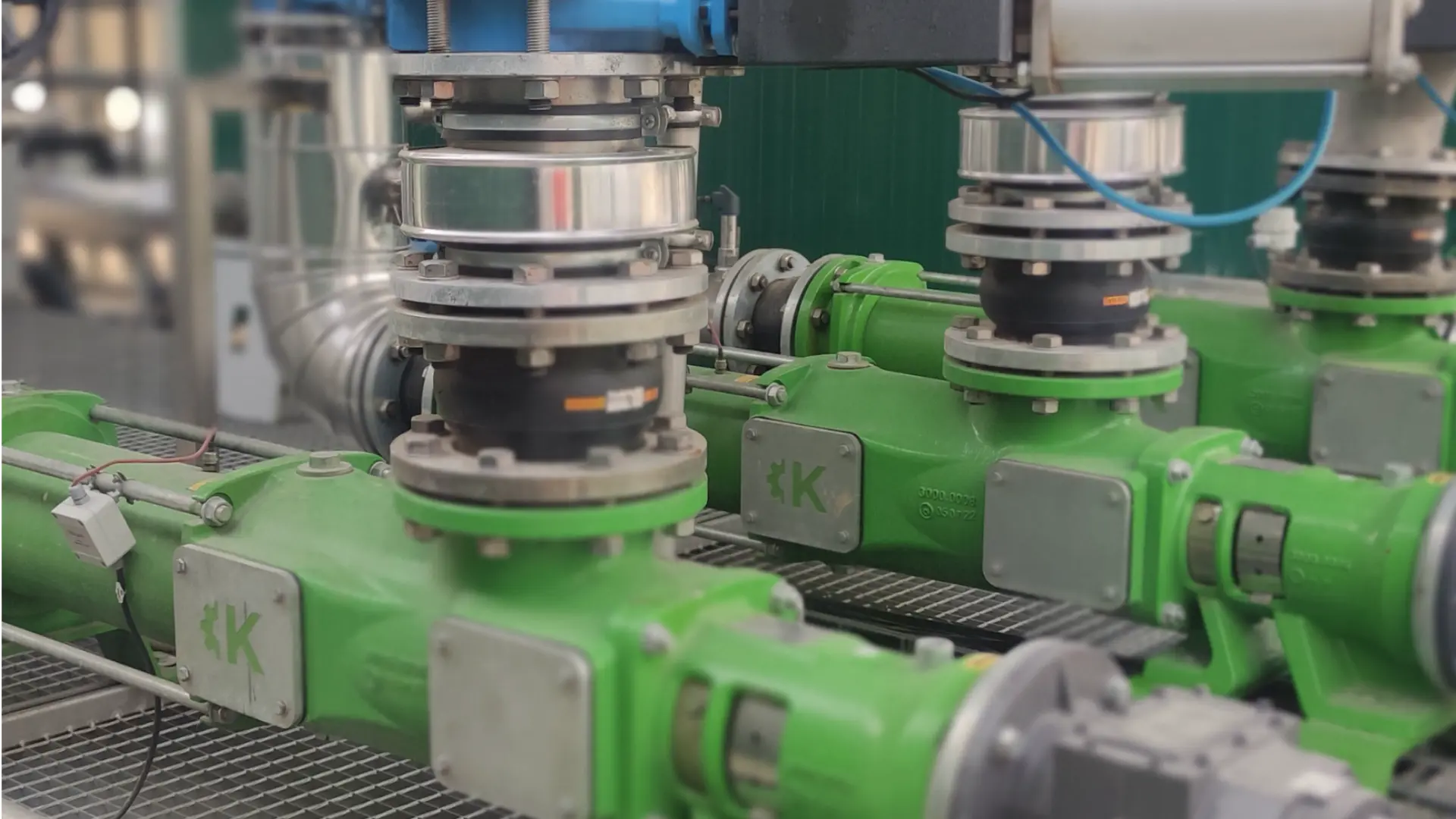
That is how Kronoa was born: a progressing cavity pump designed and manufactured in Spain, built for demanding applications that require robustness and reliability. Unfortunately, a robust and reliable mechanical design cannot be priced at the same level as other “low-cost” brands. Our strategy is different: to offer the customer a premium pump capable of withstanding heavy-duty applications.
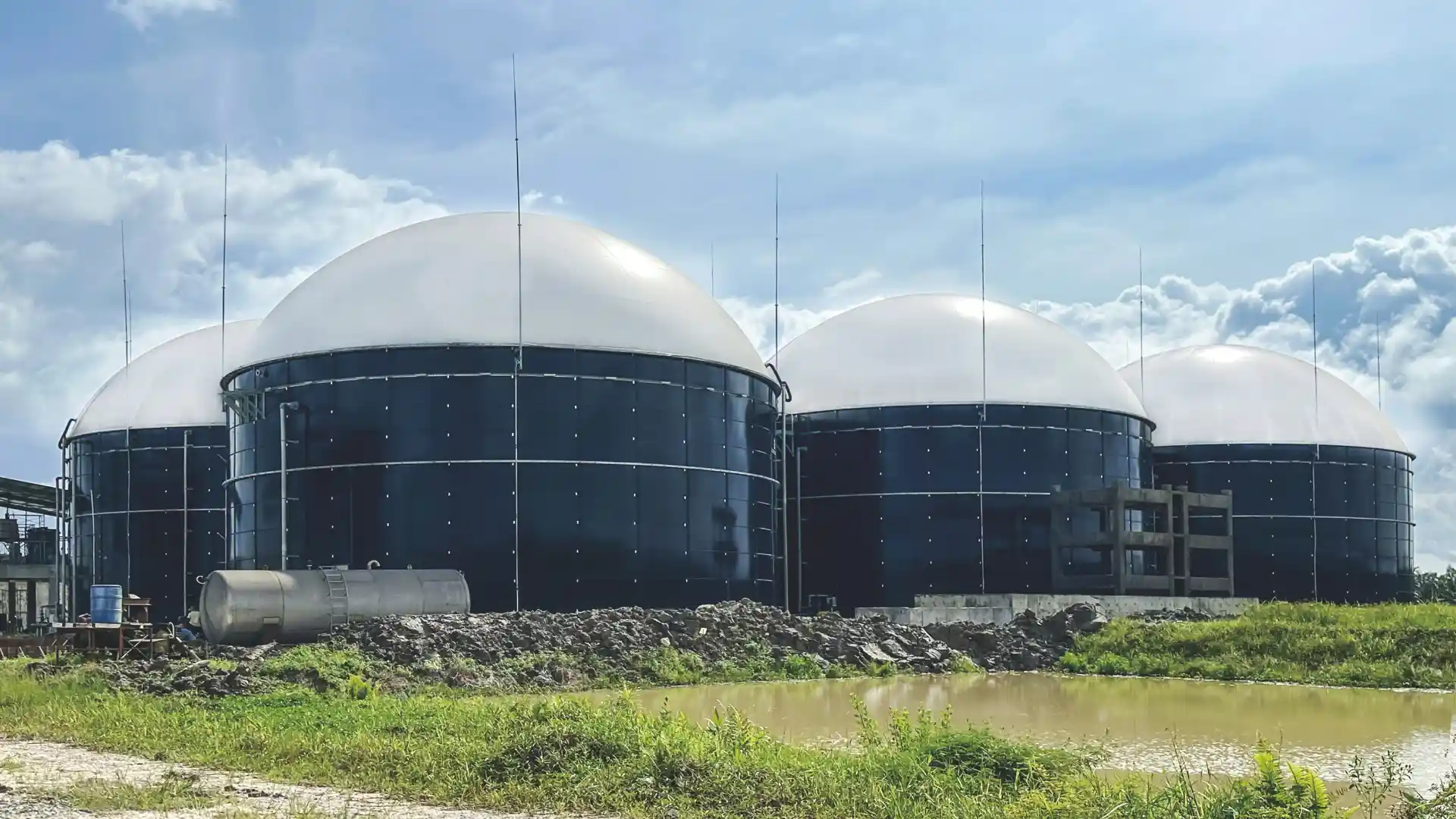
In parallel, over the last few years, we have also heavily reinforced our engineering division, designing and constructing anaerobic digesters and glass-fused-to-steel tanks for water and biogas plants, including flow modeling and homogenization studies through our various mixing systems when required.
After offering maintenance and cleaning services for existing anaerobic digesters, mostly built of concrete, we were highly surprised by the complete lack of accessibility for cleaning operations over the years. Simply put, no one thought that they would need to be emptied and cleared of accumulated sediment after 10-15 years of operation. We have taken all these aspects into account when designing Protech’s anaerobic digesters.
Another line that has grown significantly is temporary wastewater bypassing, along with associated emptying, cleaning, and dewatering services.
The urban water sector in Spain experiences a paradox: on one hand, it has cutting-edge technology and operational excellence companies, but on the other, it faces a silent but serious problem of aging infrastructure and chronic underinvestment.
This is where trenchless rehabilitation has shifted from an innovative alternative to an absolute necessity and the main driver of urban works.
A very large portion of sewage pipes in urban centers is over 30 or 40 years old, nearing or exceeding the end of their useful life. This leads to filtration, water loss, breakages, and significant purification cost overruns. European Union regulations demand increasingly strict control over wastewater treatment, forcing municipalities to urgently mitigate watertightness failures in their pipelines.
This is where Protech Continental plays an important role, as we specialize in offering tactical bypass services, handling from a few hundred to thousands of m³/h of wastewater. It’s not just a simple rental; we provide a complete service including assembly, supervision, and dismantling throughout the bypass operation. Currently, we can monitor all pump operating parameters remotely, providing continuous 24/7 tracking during these increasingly demanding tasks.
Protech Continental Group works with a broad range of solutions, from pumps and mixers to separators, tanks and digesters. When a new project arrives, how do you determine the right technical combination for the plant?
We started years ago working mainly with progressing cavity pumps, and from there, we have expanded our focus toward more comprehensive solutions as market needs evolved. In recent years, applications such as co-digestion with fruit and vegetable waste, co-substrate platforms, and generally all those processes where moving a fluid is not enough, where you must deeply understand the system’s behavior, have gained weight.
Therefore, today our work is not limited to supplying equipment. We integrate pumping, mixing, digester tanks, cleaning, solid-liquid separation, and auxiliary solutions within the same technical approach. In many cases, a project starts with a specific need, for example, a cleaning service, a mixing system, or a pumping setup, and ends up becoming a global solution for the entire plant.
What differentiates us is precisely this approach: we analyse the entire challenge rather than focusing on a single piece of equipment. We study each application, propose the most suitable configuration and implement a coherent, reliable solution with a single point of contact for the customer. We have moved beyond product supply to become a technical partner capable of delivering solutions for increasingly complex projects.
Kronoa Engineered Solutions pumps have been specifically developed for demanding applications. What led you to focus on this positioning, and which applications are currently driving demand?
At Kronoa, we deliberately chose not to focus on the most standard progressive cavity pump applications. Instead, we concentrated on processes where operational demands are significantly higher. Both wastewater treatment and biogas production involve highly challenging applications, and this is where we have directed our product development efforts: robust pumps designed to operate under severe conditions while maintaining high reliability.
Many manufacturers target their equipment at high-volume applications, such as liquid sludge at 2-3% dry matter. We, on the other hand, preferred to specialize in more demanding applications: high-pressure pumping, sludge with high solids concentration, or fluids containing sand, glass, and plastics , including high-temperature applications.
In biogas and biomethanation production plants, for example, we work with Biomix mixing pumps for pumping multiple organic substrates, expired fruits, vegetables, digestates, and highly loaded organic waste, where wear and process complexity are high. We have also specialized in high-temperature applications for thermal hydrolysis processes, working with sludge at over 120°C.
Our goal has not been to compete in volume and mass production, but to provide reliable solutions in applications where technical expertise truly makes a difference. That is where we believe Kronoa brings the most value and where we have built our specialization.
You have expanded into Chile and Estonia to strengthen your international presence. What motivated this strategy, and what are you aiming to achieve?
At Protech Continental Group, the group of which manufacturing company Kronoa Engineered Solutions is a part, we have been working in international markets for years, but in recent years we saw the need to structure this expansion in a way that is closer to the customer and more specialized. The main goal was clear: to provide better technical and commercial support right where our customers are.
In Europe, we reinforced our presence through Kronoa Northern Europe OÜ, a “Customer Centre” located in Estonia from which we cover Northern and Western European markets with greater proximity and responsiveness. In parallel, we have also expanded our network of distributors across various European countries.
In Latin America, growth followed a similar path. The former subsidiary Protech Continental Chile, which focused on progressing cavity pumps, evolved toward an activity increasingly centered on water treatment in Chile, Argentina, and other nearby markets. This led us to transform it into Kronoa Latam, with a structure more specialized in technical support, after-sales service, and project accompaniment for Kronoa in Central and South America.
Rather than pursuing purely commercial expansion, our objective is to be closer to our customers and provide faster, stronger technical support both in Europe and Latin America.
“Protech Rental Service” seems to be an important piece of your value proposition. When does it make sense to rent equipment, and how do you respond to the customer in those cases?
Equipment rental makes sense when the customer needs a temporary solution and, above all, when just dropping off a pump at the job site is not enough. It is increasingly in demand because these jobs require expertise to achieve an excellent setup, offering immediate response capacity throughout the rental period.
In the past, rental services were much simpler: equipment was delivered and the job was considered complete. However, we realized that challenges rarely occur during installation; they typically arise during operation, when the risk of failure is highest. This becomes even more complex when multiple units operate simultaneously, with long pipelines, significant elevation differences or challenging environments such as beaches, agricultural areas or locations with difficult access.
That is why our approach today extends far beyond equipment rental. We provide a complete service: selecting the most appropriate solution, installing it, monitoring performance and being ready to respond immediately if any issue arises. This comprehensive approach has driven substantial growth in this business area, making projects viable that previously would not have been possible without full-service support.
Looking ahead, what do you believe will have the greatest influence on customer decisions: engineering expertise, response time or the ability to support projects throughout their lifecycle?
Looking to the future, we believe that what will continue to make a difference is the ability to provide specific or comprehensive solutions, and that can only be achieved through accumulated technical experience. More and more, the market is not lacking equipment, it is lacking solutions. And you cannot offer a solution if you are a newcomer: you need to have worked for many years, seen real problems, and conducted previous studies that allow you to translate that experience into plant improvements.
For this reason, the companies that will stand out are those capable of contributing experience, technical expertise and engineering judgement, translating all of this into improvements in plant efficiency, maintenance performance and problem-solving capabilities. The market is clearly moving in this direction: customers are no longer looking solely for equipment; they are looking for answers to existing operational challenges.
In the end, everything revolves around solutions. Before, there were dirty digesters, sludge platforms that weren’t built, poorly managed rentals mal resueltos y con with blockages… and many of those things lacked a clear answer. Now, solutions do exist, but only because companies have developed them over time. And that only comes from experience, because starting from scratch and trying to create solutions overnight is very complicated.
Customers need a technical explanation of how their challenges will be solved. They do not simply want equipment; they want to understand how the solution will operate and how their installation should be designed to achieve optimal performance.
Thank you, Domingo, for sharing with us your vision of the sector and the evolution and work of Protech Continental Group and Kronoa Engineered Solutions.