In the field of waste treatment plants (WWTP), having equipment that integrates several functions into a single compact system is key to optimizing processes and reducing costs.
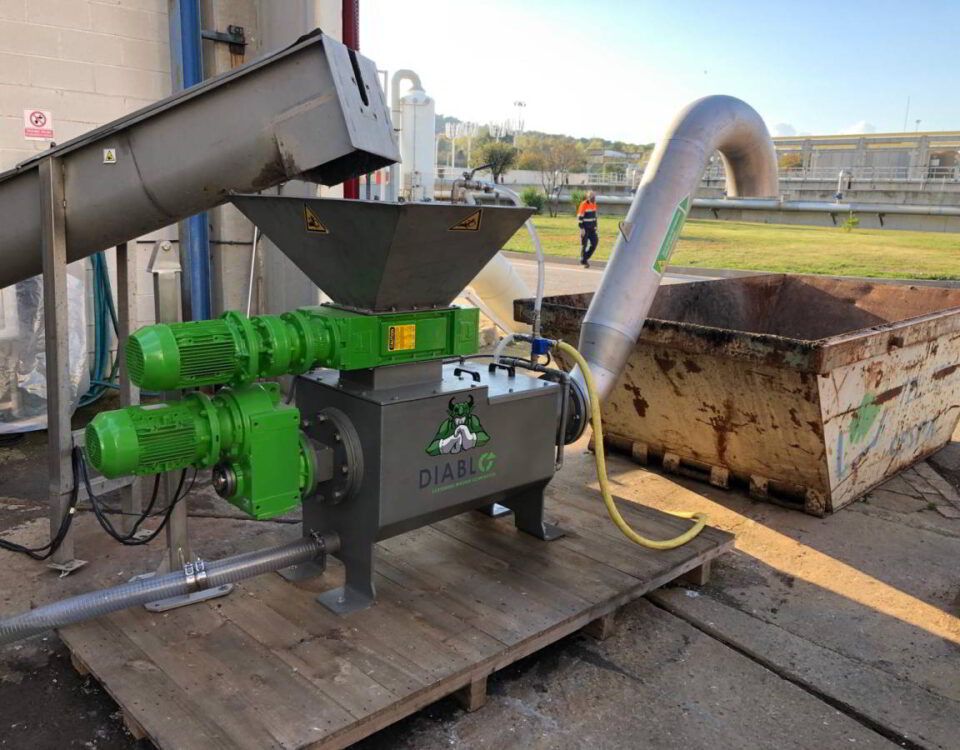
Our Diablo Screening Washer Compactor is designed for crushing, cleaning, compacting and dehydrating the solids captured in the roughing grates, facilitating the handling and final disposal of waste.
How the Diablo compactor works in waste treatment
- Initial grinding: reduces the size of solids to increase their surface area, facilitating the removal of organic matter during washing.
- Double washing system: effectively removes organic waste, which is returned to the purification process, avoiding its sending to landfill.
- Compaction and dehydration: achieves up to 55% of dry matter and a volume reduction of between 80 and 90%, which significantly reduces odors and facilitates transport and storage.
The compact system includes six integrated functions: feeding, pre-washing, crushing, post-washing, separation, compacting and dehydrating.

Benefits for waste treatment in WWTP
- Significant reduction in the volume and weight of solids.
- Improved solid waste management and disposal.
- Minimization of odours and environmental risks.
- Return of organic matter to the purification process for greater efficiency.
- Automated control and monitoring by PLC, with integration of signals from the roughing grates.
Robust construction in stainless steel AISI 304 or AISI 316, with the option of mobile bench for transport between installations.
Looking for an efficient solution for the treatment of industrial waste at your plant?
Contact us and find out how our Diablo compactor can optimize your process and reduce costs.