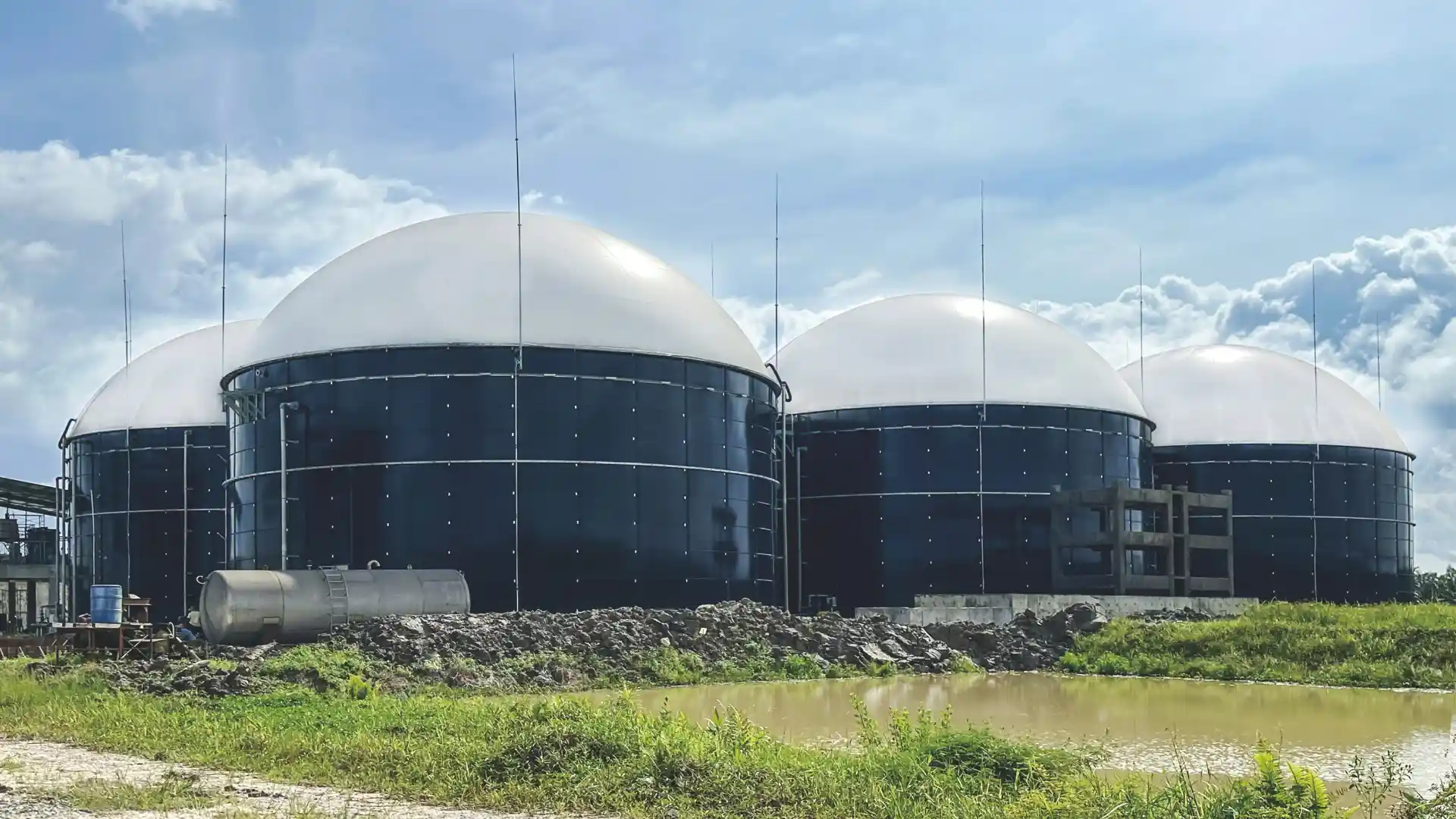

The treatment of industrial wastewater is a key challenge in many sectors, especially those with high levels of organic pollution. Industrial wastewater can contain a wide variety of pollutants, such as suspended solids, oils, fats and chemicals, requiring the use of specialised treatment systems according to the specific characteristics of each industry.
One of the most effective solutions for treating these effluents is the use of anaerobic digesters. These biological systems are highly effective at breaking down organic matter without the need for oxygen, offering significant advantages in terms of energy efficiency, sludge reduction and sustainability.
Operation and efficiency
Anaerobic digesters are based on a biological process of decomposing organic matter in the absence of oxygen. This process is carried out by anaerobic microorganisms, which break down complex organic compounds into simpler substances, producing biogas as a by-product, mainly methane and carbon dioxide.
- Hydrolysis phase: Complex organic matter (such as proteins, carbohydrates and fats) is broken down into simpler compounds such as volatile fatty acids (VFAs).
- Acidogenesis phase: The products of hydrolysis are converted into simpler, acidic compounds such as acetic acid, which anaerobic microorganisms use as an energy source.
- Methanogenesis phase: In the final stage, methanogens (specialised microorganisms) transform these acidic compounds into methane, which is the main component of the biogas produced.
Technical advantages of anaerobic digesters
- High efficiency in COD (Chemical Oxygen Demand) removal: Effective in reducing COD, achieving removals of up to 80-90% in effluents with high organic loads.
- Lower energy consumption: Unlike aerobic systems that require constant aeration, anaerobic digesters do not require oxygen for the process, which means significant energy savings compared to conventional technologies.
- Biogas generation: The anaerobic process not only removes pollutants, but also generates biogas, which can be used as a renewable energy source, contributing to the sustainability of industrial operations.
- Sludge reduction: As it is a more efficient process and does not produce oxygen, the amount of sludge generated is significantly lower compared to aerobic systems, reducing the costs of treating and disposing of this waste.
Factors to consider
To ensure the efficiency of the anaerobic process, it is essential to consider several technical factors before implementing anaerobic digesters.
- Temperature: Anaerobic systems work best at moderate to high temperatures, between 35 and 40 °C, which ensures greater microbial activity and, therefore, greater treatment efficiency.
- Hydraulic retention time (HRT): This must be long enough to allow for complete decomposition of organic matter.
- Substrate concentration: The organic load influences the growth rate of anaerobic microorganisms. It is important to carry out a proper analysis of the effluent quality in order to correctly size the system.
At Protech Continental, we have extensive experience in implementing customised wastewater treatment solutions tailored to each client’s specific needs.
With their many advantages, such as reduced operating costs, biogas generation and lower environmental impact, anaerobic digesters are one of the most sustainable options for effluent treatment.
Contact us to learn more about how this technology can optimise the treatment of your industrial wastewater and improve your company’s operational efficiency.