When a water-related emergency affects a pumping station, a wastewater treatment plant (WWTP), a water abstraction well or a critical public facility, the challenge goes beyond removing water. The real priority is to prevent shutdowns, protect equipment and restore operations as quickly as possible.
During heavy rainfall, storms or rising river levels, these facilities are often exposed to water ingress, flooding in equipment chambers, electrical failures, blockages caused by solids and loss of access. The smaller and more geographically dispersed the facilities, the more important it is to respond promptly with the right technical expertise.
What is a water-related emergency?
A water-related emergency is an incident involving the accumulation or overflow of water, whether clean, contaminated or containing solids, that puts a facility, its operations or the surrounding area at risk.
For public authorities, this can affect wastewater treatment plants, pumping stations, sewers, inspection chambers, sumps, electrical installations or service areas. In all these cases, the challenge is to remove the water without making the situation worse or prolonging service disruption unnecessarily.
Why an immediate response matters
In a water-related emergency, response time is a decisive factor in the extent of the damage and the facility’s operational continuity. A delayed response can lead to:
- Flooding in pumping chambers.
- Loss of electrical power.
- Failures in instrumentation and level control systems.
- Solids and sludge being carried into the facility and accumulating.
- Overflowing wells and inspection chambers.
- Contamination of sensitive areas.
- Restricted access to the facility or complete loss of access.
- Partial or total service interruption.
A rapid response therefore requires an initial technical assessment, an accurate diagnosis of the incident and appropriate temporary corrective measures. These measures help contain the impact, restore control over water flows and levels, and maintain safe operating conditions until a permanent solution can be implemented.
What does a facility need to manage a water-related emergency effectively?
An effective response depends on three factors: a rapid assessment, suitable mobile equipment and reliable technical support.
Rapid assessment of the situation
Before deploying equipment, it is essential to understand what is happening. Pumping clean water is different from handling wastewater containing solids, just as a one-off incident differs from a continuous inflow. It is also important to establish whether there is a risk of system failure upstream or downstream, whether the affected location is accessible and whether the facility can remain partially operational.
Without this initial assessment, the selected solution may be insufficient or unnecessarily complex.
Selecting the right equipment
Choosing a powerful pump is not enough. Equipment selection must account for the required flow rate, total dynamic head, friction losses, discharge line length and suitability for the type of water being pumped.
Undersized equipment will not provide sufficient capacity. Oversized equipment can add unnecessary complexity, cost and energy consumption. In an emergency, there is little room for such errors.
Readily available mobile equipment
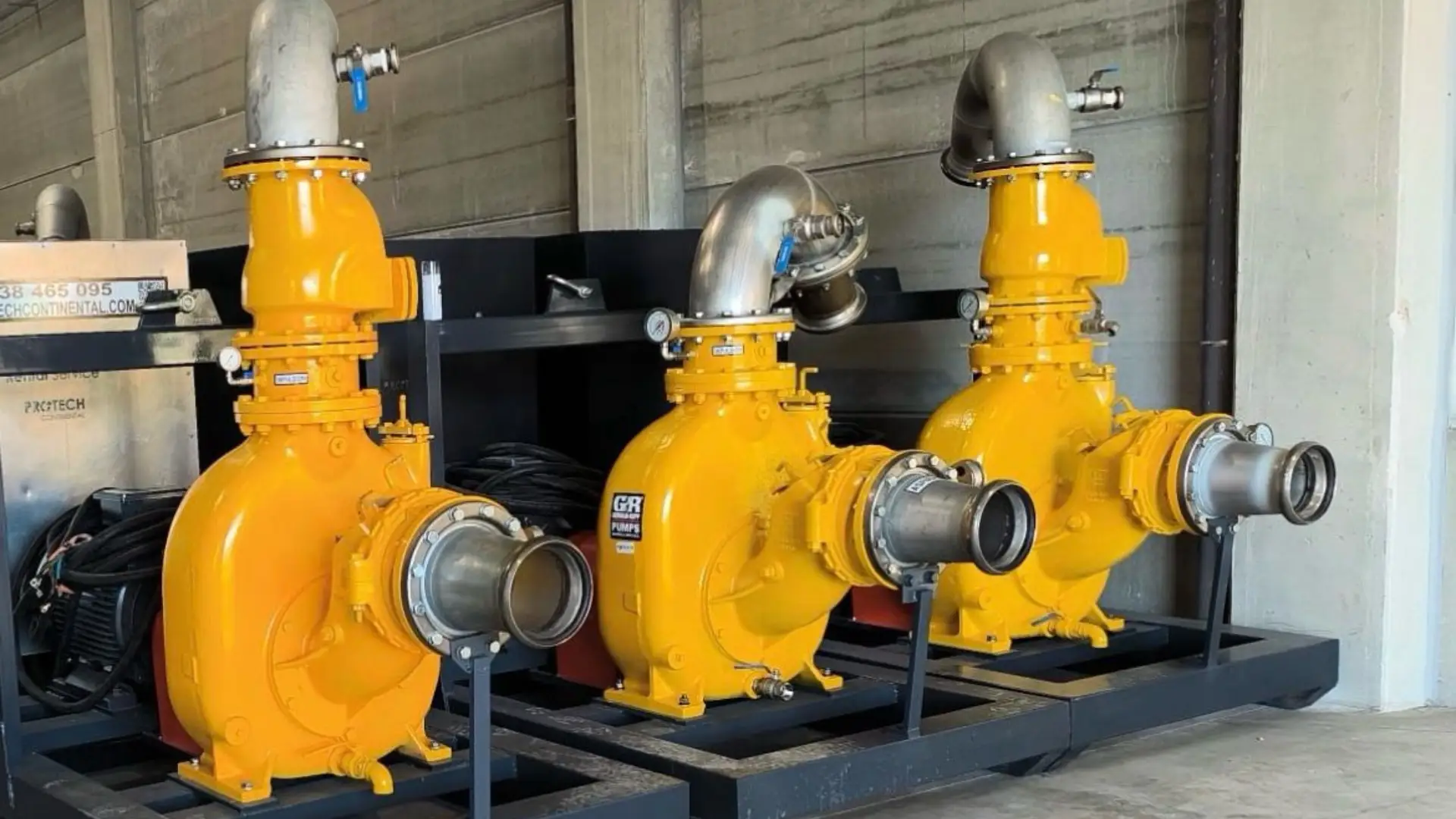
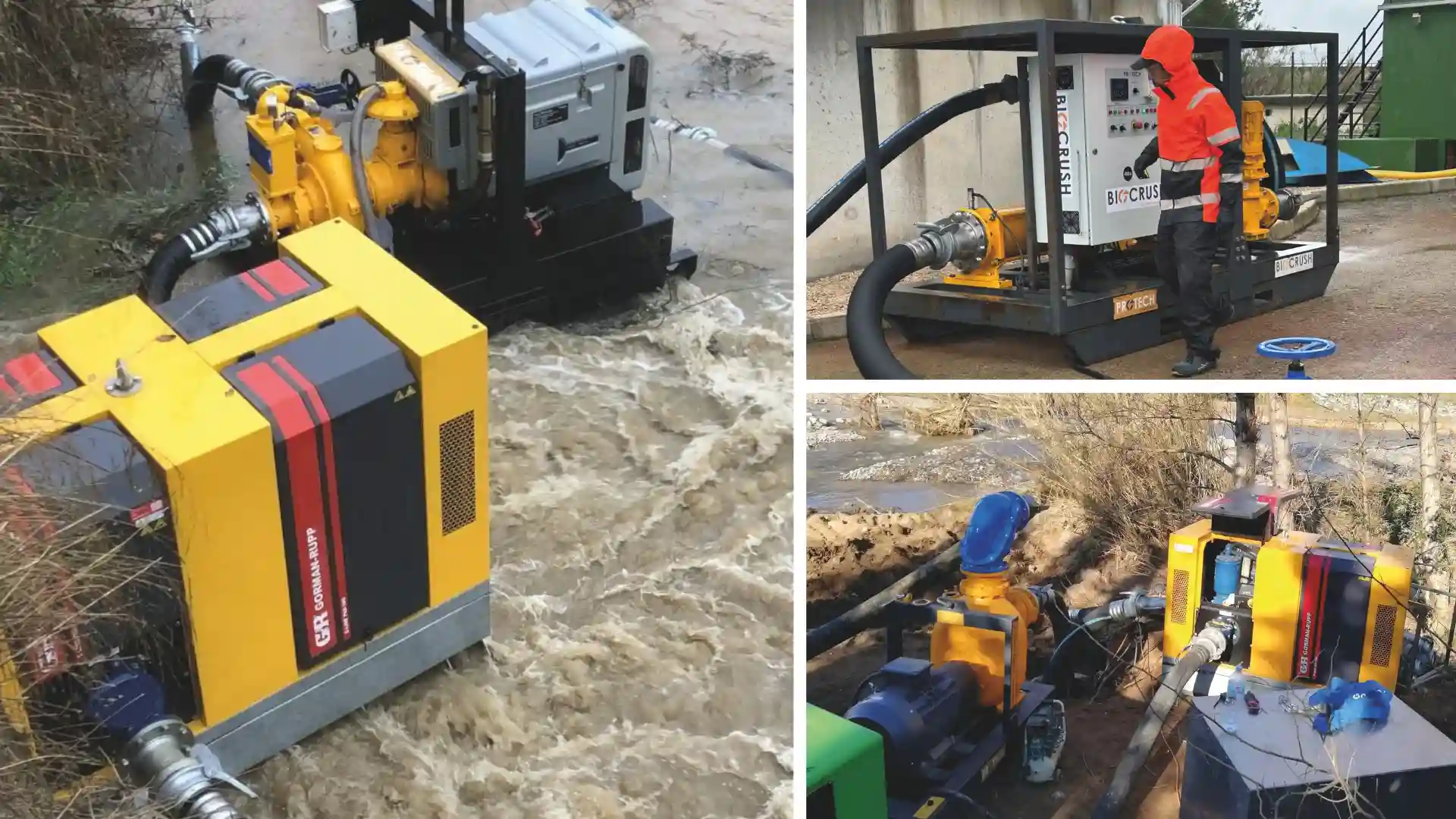
During a water-related emergency, a fast response depends on having equipment that can be transported, installed and put into operation without delay. Self-priming pumps, submersible pumps, high-capacity engine-driven pump units and equipment suitable for water with or without solids are particularly useful. The key is having the right equipment for the specific situation.
Prompt installation and commissioning
The solution goes beyond delivering a pump. A water-related emergency requires equipment transport, installation, priming or preparation, commissioning and supervision throughout the operation.
At small or critical facilities, this technical support often makes the difference between an effective response and an inadequate one. Removing water must be done without making the problem worse.
Common mistakes that make the problem worse
Several common mistakes can worsen a water-related incident at a public facility:
- Waiting too long: Attempts to resolve the situation using internal resources sometimes continue for too long. This delays the response and increases the risk of overflow or damage to the facility.
- Improvising the installation: Poorly arranged suction lines, discharge pipework or electrical connections can compromise pumping performance or cause further problems.
- Failing to plan for operational support: In a critical situation, delivering equipment is not enough. Technical support is needed to adjust, supervise and, if necessary, reconfigure the solution.
What a temporary pumping service such as Protech Rental Service provides
A well-planned temporary pumping service enables public authorities to respond to an incident without disrupting normal operations for longer than necessary.
Key benefits
24/7/365 support for a prompt response.
Technical sizing based on flow rate, fluid characteristics and actual site conditions.
A specialised equipment fleet for different types of water-related emergencies.
A turnkey service: transport, installation, commissioning and dismantling.
On-site technical support throughout the operation.
How Protech Rental Service approaches these operations
Responding to a water-related emergency involves more than moving water. It means protecting the facility, minimising downtime and restoring control through a complete technical solution.
Protech Rental Service brings together round-the-clock support, the technical expertise needed to select and size the solution, equipment suited to each application and on-site assistance until the incident is resolved. Beyond delivering a pump, the service provides a coordinated technical response that enables public authorities to contain the problem safely and without unnecessary delays.
Frequently asked questions about water-related emergencies
How should a public authority respond to flooding at a public facility?
The first step is to assess the full extent of the problem, identify the type of water involved and determine whether urgent temporary pumping is needed to prevent further damage or service interruption.
What types of equipment are used in a water-related emergency?
The equipment depends on the situation, but self-priming pumps, submersible pumps and high-capacity engine-driven pump units are commonly used, particularly when handling water containing solids or high flow rates.
Why is correct technical sizing important?
Incorrectly sized equipment may provide insufficient capacity, increase costs or fail to resolve the emergency in time. Technical expertise helps prevent selection errors and enables a faster response.
Does a temporary pumping service also include installation?
Yes. A fully turnkey service should include transport, installation, commissioning, supervision and final dismantling.